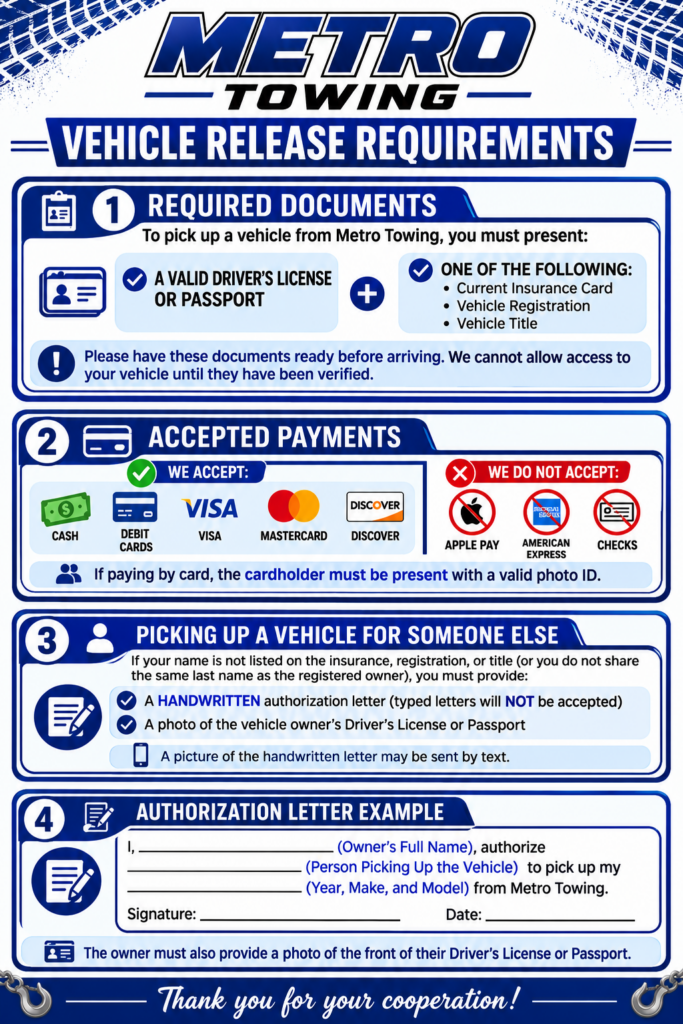
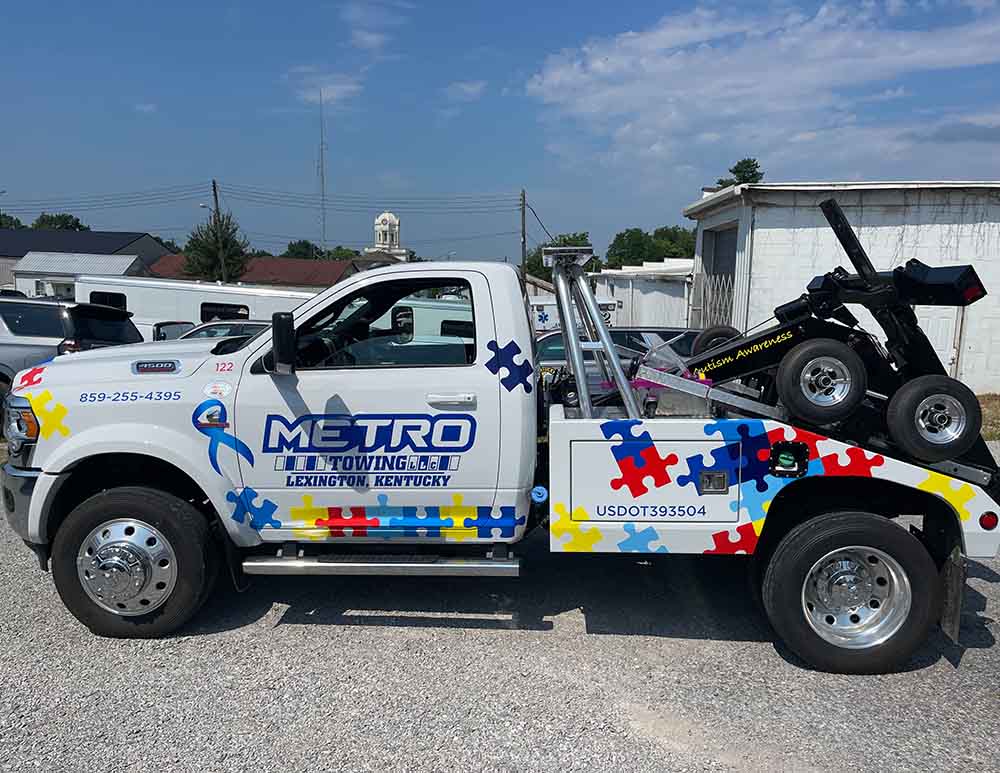
Car trouble has a way of happening at the least convenient moment. You may be on the way to work, picking up a child, heading home after dark, or trying to leave a parking lot when your vehicle will not move safely. In those situations, knowing when to call a tow truck Lexington KY can help you make a calm, practical decision.
Not every vehicle issue requires a tow. A flat tire, dead battery, or locked car may be resolved through roadside assistance if the vehicle is otherwise safe to drive. Other problems, including a collision, overheating, a serious mechanical failure, steering trouble, or a damaged wheel, can make driving risky. In those cases, towing protects you, other drivers, and the vehicle from additional damage.
Metro Towing provides 24/7 customer support for towing and light roadside services in Lexington and Central Kentucky. The company also offers equipment hauling and private-property impounding. This guide explains the most common times to call for help, what to do while waiting, and what information a towing provider will need.
Call a Tow Truck When Your Vehicle Cannot Be Driven Safely
The clearest sign you need a tow is simple: if operating the vehicle could put you or others at risk, do not try to “make it home.” A tow may be the better choice when the vehicle has lost steering response, has a damaged tire or wheel, is leaking fluid, overheats repeatedly, makes severe mechanical noises, or will not start after a basic battery check.
Trust your instincts. If something feels unsafe, pull over as soon as you can, turn on hazard lights, and arrange professional help.
Common Situations That May Require Towing
After a Collision
After a crash, do not assume a vehicle is safe just because it still starts. Damage to the bumper, wheels, suspension, steering, lights, cooling system, or undercarriage may not be obvious from the driver’s seat. If there is visible damage, a fluid leak, a warning light, difficulty steering, or anything affecting the vehicle’s control, request towing instead of driving away.
If emergency responders are on scene, follow their directions. Move your vehicle only if it is safe and you are instructed to do so. In a serious collision or if anyone is injured, call 911 first.
A Breakdown That Cannot Be Fixed Roadside
Some breakdowns have simple solutions; others do not. A dead battery may only need a jumpstart, but if the car will not remain running, the battery or charging system may need service. A flat tire might be resolved with a spare, but not if the tire is shredded, the rim is damaged, or the vehicle does not have a usable spare.
Metro Towing offers light services including unlocks, tire changes, and jumpstarts. When a basic roadside service will not get the vehicle safely back on the road, a professional towing service can take it to a repair shop or another appropriate destination.
Overheating or Warning Lights
An overheating engine should be taken seriously. Pull over safely, turn off the engine, and allow it to cool. Do not open a hot radiator cap. Continuing to drive an overheating vehicle can lead to more extensive damage.
The same cautious approach applies to severe warning lights, unusual smoke, strong burning odors, or loud mechanical sounds. If you cannot identify a safe, straightforward cause, call a towing provider rather than taking chances on the road.
Steering, Braking, or Tire Damage
Loss of steering response, brake problems, a blown tire, or a damaged wheel can quickly turn into a safety issue. Do not continue driving with a flat tire for any significant distance because it can damage the wheel and affect control. If the vehicle pulls sharply, vibrates heavily, or is difficult to steer, stop and call for assistance.
When Roadside Assistance May Be Enough
Roadside help can be a good solution when the issue is limited and the vehicle is otherwise in sound operating condition. Common examples include a locked car, a battery that needs a jump, or a flat tire with a usable spare.
However, roadside assistance has limits. If a jumpstart works but the car quickly dies, if a spare tire cannot be installed safely, or if the driver is on a dangerous road shoulder, towing may still be the best next step.
When you call, describe the situation clearly. The dispatcher can help determine whether light roadside service or a tow truck is appropriate.
What to Do While Waiting for a Tow Truck
Your safety comes before the vehicle. If possible, pull off the road onto a safe, level area. Turn on hazard lights and keep your doors locked if you feel unsafe. At night or during low visibility, make the vehicle easier to see without putting yourself in traffic.
Do not stand between your vehicle and moving traffic. If you can safely wait behind a guardrail or away from the travel lanes, do so. If you are in a dangerous position, call 911.
The National Highway Traffic Safety Administration’s Move Over safety guidance reminds drivers to slow down and move over when approaching stopped emergency or service vehicles. Your actions while waiting matter too: stay alert, keep children close, and do not attempt repairs that place you near traffic.
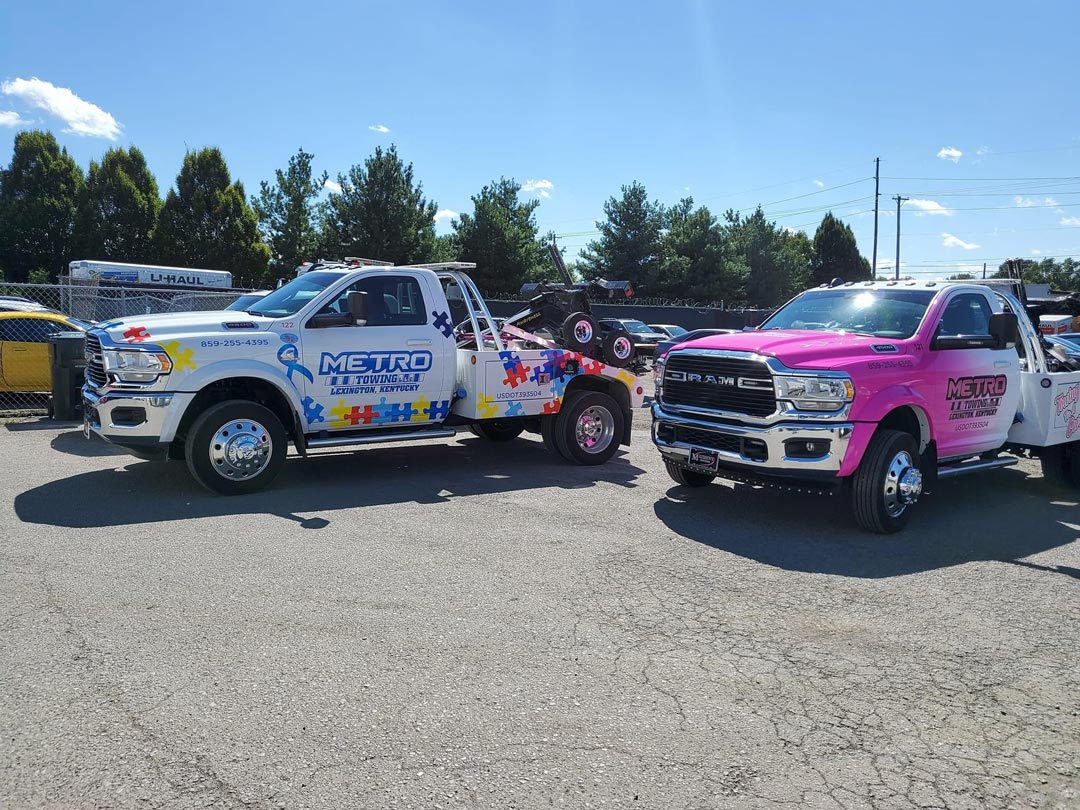
Information to Have Ready When You Call
Providing good information helps the towing company send the correct truck and plan a safe pickup. Be ready to share:
- Your exact location or nearest landmark
- The vehicle’s make, model, color, and condition
- Whether it is in a parking lot, driveway, road shoulder, ditch, garage, or other location
- The nature of the problem
- Whether the vehicle is drivable or damaged
- Your preferred destination, such as a repair shop or home
- A callback number
If the vehicle is unusual, low-clearance, heavily loaded, or a classic car, mention that as well. Metro Towing notes that it hauls classic cars and uses updated equipment, so describing the vehicle and its condition helps the team prepare correctly.
Towing for Classic Cars and Special Vehicles
Classic cars, restored vehicles, low-clearance vehicles, and specialty equipment deserve additional attention during transport. They may require different loading methods, extra clearance, or specific securement procedures. Never assume every towing situation is the same.
Tell the dispatcher about any special requirements before the truck arrives. Sharing details upfront allows the provider to bring the appropriate equipment and avoid delays.
Towing vs. Equipment Hauling
Towing is generally about moving disabled or parked vehicles. Equipment hauling is a different service for moving machinery, heavy equipment, or other oversized loads that need specialized trailers and planning.
Metro Towing offers both. Its hauling capabilities include Landoll trailers with a winch cable and lowboy trailers for heavy loads. If you need to move equipment, schedule the job in advance and provide the weight, dimensions, pickup location, delivery location, and loading conditions when requesting a quote.
Choosing a Towing Company in Lexington
When you need a tow truck, look for clear communication, appropriate equipment, and a provider that serves your location and situation. Ask what service is being dispatched, where your vehicle can be taken, and how to prepare for pickup.
Metro Towing has served Central Kentucky since 1989 and offers 24/7 customer support. Its light services include unlocks, tire changes, and jumpstarts, while its vehicle-towing services can help when driving is not safe.
Call Metro Towing for Help in Lexington, KY
If you are stranded, involved in a collision, dealing with a serious vehicle issue, or simply unsure whether it is safe to drive, do not take an unnecessary risk. For a tow truck in Lexington, KY, call Metro Towing at 859-255-4395 or 859-278-TOWS. The company is located at 855 Angliana Avenue, Lexington, KY 40508 and provides 24/7 customer support.
For non-emergency towing, hauling, or private-property needs, you can also contact Metro Towing to discuss the right service.
Frequently Asked Questions
When should I call a tow truck in Lexington, KY?
Call a tow truck when your vehicle cannot be driven safely, including after a collision, during overheating, with major tire or wheel damage, when steering or brakes feel unsafe, or after a serious mechanical failure. A towing provider can also help when roadside assistance will not safely resolve the issue.
Can a tow truck help if my car battery is dead?
Metro Towing offers jumpstart services for dead batteries. If the vehicle starts and operates normally afterward, a tow may not be needed. If it does not stay running, has repeated battery trouble, or displays warning signs, towing it to a repair shop may be the safer option.
Does Metro Towing offer 24-hour towing in Lexington?
Metro Towing provides 24/7 customer support for towing needs in Lexington and Central Kentucky. Call 859-255-4395 or 859-278-TOWS when you need help with a disabled vehicle or want to discuss the appropriate service.
What should I do if my car breaks down on a busy Lexington road?
Turn on your hazard lights, pull over safely if possible, and remain away from traffic. If the location is unsafe, call 911. Then contact a towing company with your exact location, vehicle description, and the nature of the problem so the correct assistance can be dispatched.
Can Metro Towing tow classic cars?
Yes. Metro Towing states that it hauls classic cars. Tell the dispatcher about the vehicle’s condition, clearance, modifications, and any handling preferences when you call so the team can prepare for a careful pickup.
Does Metro Towing offer services besides vehicle towing?
Yes. Metro Towing offers light roadside services including unlocks, tire changes, and jumpstarts. It also provides equipment hauling and private-property impounding. Explain your situation when you call so the team can direct you to the appropriate service.
What information do I need to request a tow?
Provide your location, vehicle make and model, condition, the reason you need help, and your destination. Mention whether the vehicle is blocked in, damaged, in a garage, low-clearance, or otherwise difficult to access. Clear details help the towing provider send appropriate equipment.