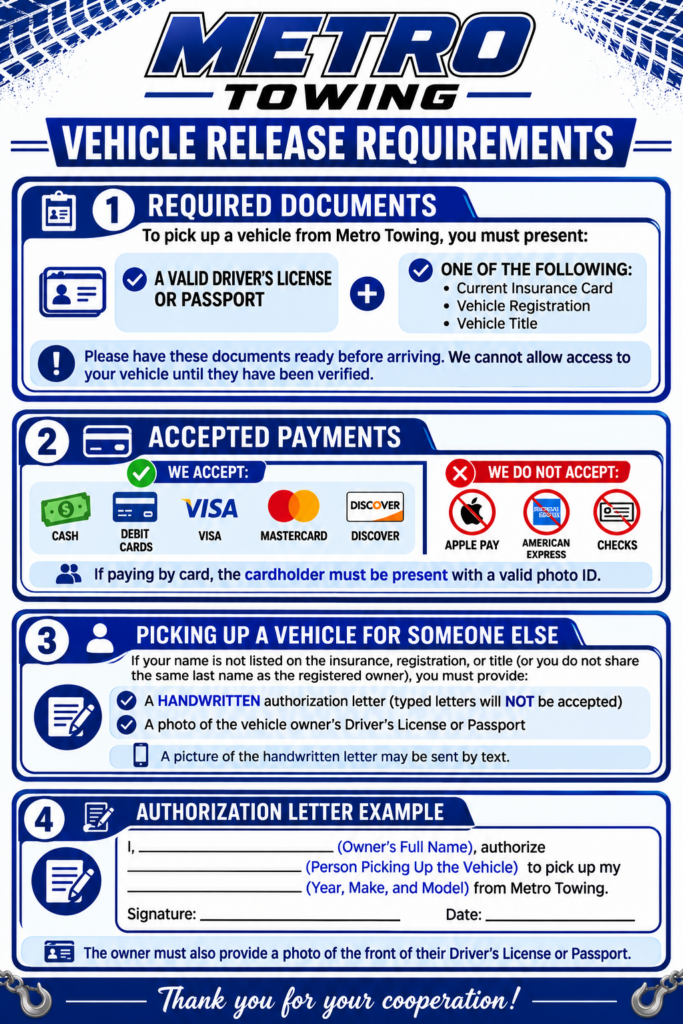
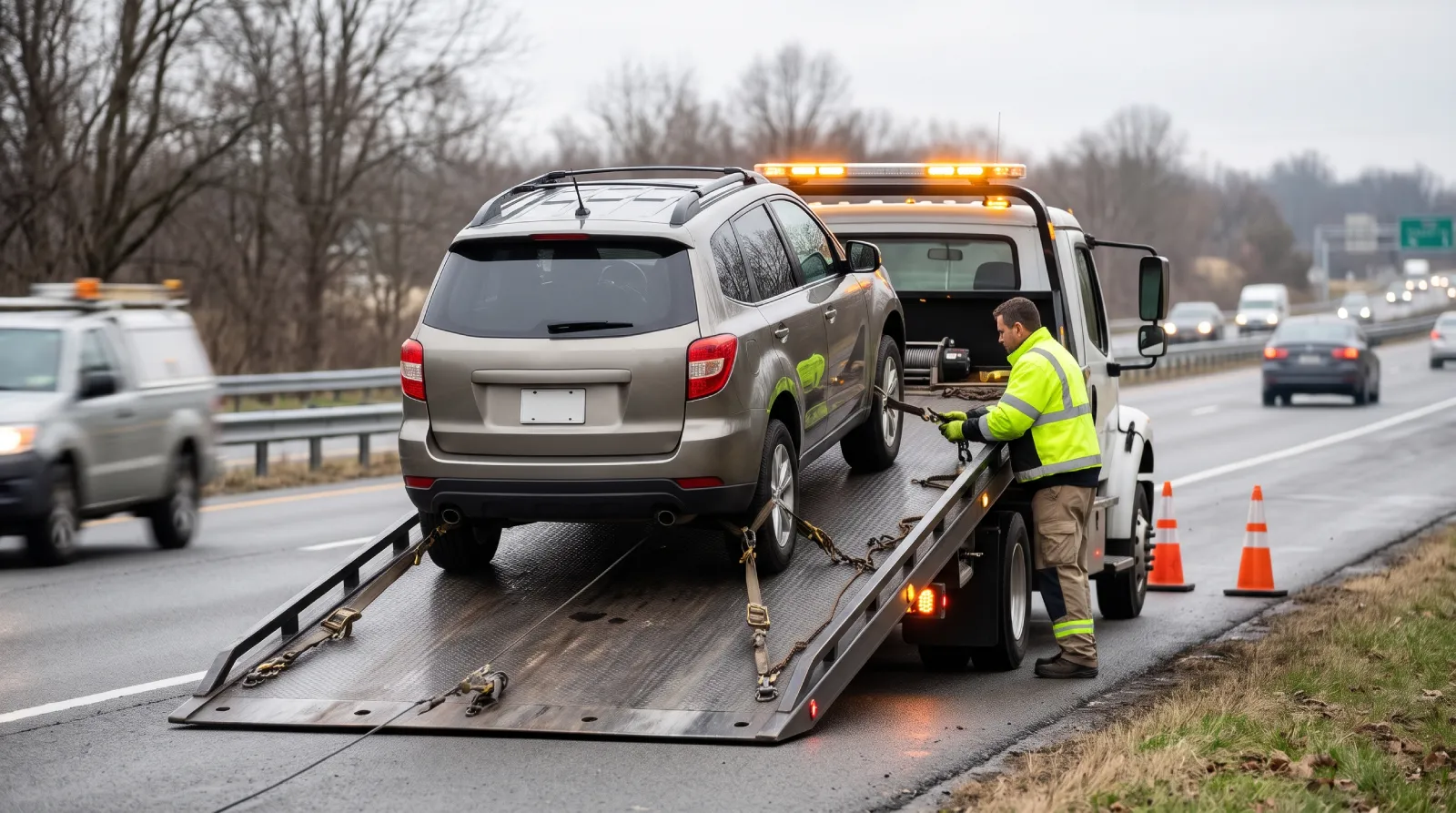
For AWD towing flatbed decisions, start with the exact vehicle’s transport instructions. Many all-wheel-drive vehicles require all wheels to be kept off the ground during towing, but the approved equipment and preparation depend on the make, model, configuration, and condition.
A flatbed is one transport method. Some manufacturer instructions also describe a wheel lift used with appropriate dollies. That does not mean every wheel-lift arrangement is suitable for every AWD vehicle.
The useful question is therefore: how will the operator transport this specific vehicle according to its instructions and current condition? If you need a tow in Lexington or Central Kentucky, accurate information at dispatch helps the company plan the equipment and approach before arriving.
Why All-Wheel Drive Changes the Conversation
All-wheel-drive systems connect the vehicle’s driven wheels through a particular drivetrain design. Moving some wheels while others remain stationary can create concerns described in the manufacturer’s towing instructions.
The details vary. Do not assume that a procedure suitable for one vehicle applies to another simply because both carry an AWD badge.
Likewise, four-wheel drive, all-wheel drive, hybrid, and electric configurations should not be treated as interchangeable labels. Give dispatch the exact model and configuration when you know it.
If you are uncertain, say so. An honest “I don’t know which drivetrain this version has” is more useful than a guess that leads the operator to plan around the wrong vehicle information.
Understand What a Flatbed Does
A flatbed or rollback carries the vehicle on the truck’s deck rather than leaving its road wheels rolling during transport. The operator still needs to assess loading, clearance, securing, and the condition of the vehicle.
A flatbed is not a reason to skip the manual. The manufacturer may specify recovery points, loading considerations, transport settings, or other preparation relevant to the vehicle.
Do not attach a line, move the vehicle, or select a setting based on a general article. Those actions should follow the appropriate instructions and the operator’s assessment.
When requesting service, explain whether the vehicle rolls, steers, or has visible damage. A car that cannot be moved normally may require additional planning even when a flatbed is available.
Distinguish a Wheel Lift From a Complete Transport Arrangement
A wheel lift raises one end of the vehicle. Dollies can be used in some arrangements to keep the other wheels from rolling on the road. Whether that arrangement is appropriate must be verified for the specific vehicle and situation.
For example, a Genesis GV70 owner manual describes AWD transport using specified equipment that keeps all wheels off the ground. It is an example of manufacturer-specific guidance, not a procedure for every model.
Avoid deciding suitability from the truck’s appearance alone. Ask how the planned arrangement meets your vehicle’s instructions and describe anything that could affect access or loading.
The operator needs a complete picture of the equipment and vehicle, not simply agreement on a familiar truck category.
Find the Correct Vehicle Information
Have the make, model, model year, and configuration available if possible. The registration, manufacturer app, original documents, or other reliable records may help identify the vehicle.
Locate the relevant owner-manual section, but do not delay an urgent safety response to search for paperwork. Dispatch can explain what information is needed to plan the service.
Be careful with manuals found online. A different model year, market, powertrain, or trim can have different instructions. Confirm that the document actually applies.
If you have a manufacturer transport instruction or a dashboard message, describe it accurately. Do not paraphrase an unfamiliar warning into a conclusion such as “it is safe to tow normally.” The exact message may matter to the operator’s planning.
Review Metro Towing’s emergency towing information when preparing your dispatch questions, then confirm the arrangement suitable for your particular vehicle.
Subaru’s 2025 Forester Getting Started Guide is another manufacturer-specific reference for towing precautions. It illustrates why an instruction for one model cannot automatically be applied to every AWD vehicle; consult the manual for your exact vehicle.
Explain Why the Vehicle Needs Transport
The reason for the tow affects the plan. A vehicle with a starting problem is different from one with a damaged wheel, collision damage, a drivetrain concern, or a blocked steering mechanism.
Tell dispatch what happened and what you can observe safely. Avoid attempting a diagnosis just to make the description sound technical.
If another professional has assessed the vehicle, explain what was said and whether any movement restrictions were given. Keep those instructions available for the operator.
Do not repeatedly drive or move the vehicle to test the problem. If it may be unsafe to operate, arrange appropriate assistance and follow the professional guidance you receive. The towing plan should be based on the actual condition, including uncertainty, rather than on a hopeful assumption.
Report Access and Clearance Conditions
Describe where the vehicle is located. A roadside shoulder, driveway, parking garage, narrow lane, and crowded lot can create different access questions.
Tell dispatch about height restrictions, steep approaches, tight turns, gates, parked vehicles, and any other obstacles you can identify safely.
Also mention low ground clearance, modified bodywork, flat tires, or a wheel that appears out of position. These observations can affect how the operator evaluates loading.
Do not try to create access by moving the car in a way that conflicts with its condition or instructions. The operator can assess what is practical when the service is planned. Accurate location details are more useful than a promise that “a truck should fit” without measurements or context.
Clarify Keys, Controls, and Vehicle Availability
Tell dispatch whether the keys are available and whether you can access the vehicle. Explain any issue with the locks, steering, parking brake, or selecting a transport setting.
Do not force controls or follow a generic online release procedure. Vehicles differ, and an incorrect action can create a new problem.
If the owner cannot be present, ask what authorization, documents, or access arrangements are needed. Policies and circumstances can vary, so establish the requirements directly with the service provider.
Also confirm whether the destination can receive the vehicle. An unattended repair facility, locked gate, or uncertain drop-off location can complicate a transport that otherwise appears straightforward.
Ask About the Planned Method Before Loading
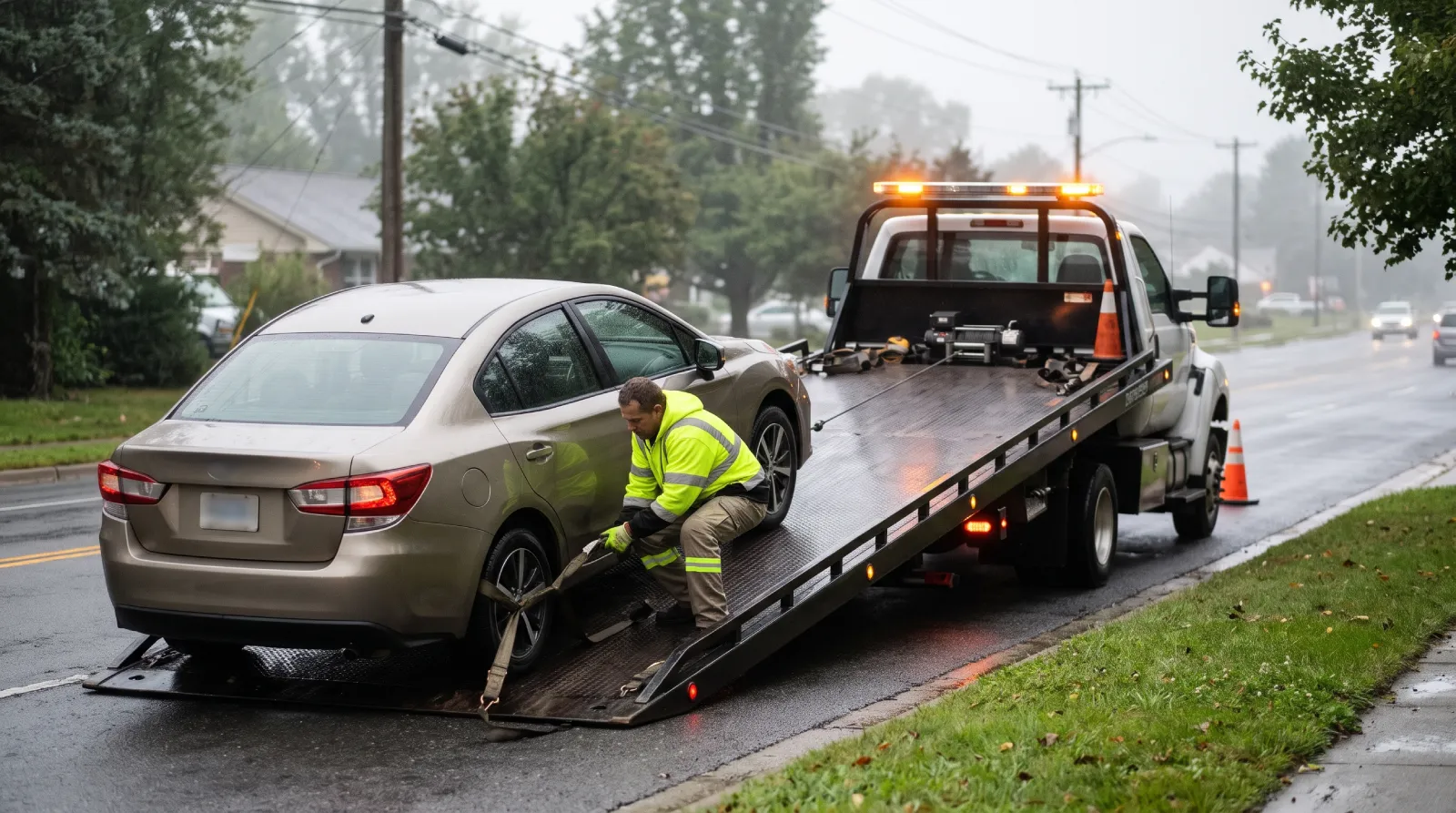
A useful conversation is specific and calm. Explain that the vehicle is AWD and ask how its manufacturer instructions will be confirmed.
If you have a relevant manual page, share it through the appropriate channel. Ask the operator to assess any visible damage or access concern before the vehicle is moved.
Do not assume that a different-looking method is automatically wrong, and do not assume every operator’s proposed method is suitable without clarification. The appropriate response is to resolve the question with the actual vehicle information.
If important instructions or conditions remain unclear, pause the movement discussion and ask how they will be verified. A general article cannot approve a towing arrangement from a distance.
Plan the Destination and Handover
Confirm the destination name, address, contact route, and receiving arrangements before transport where possible. Explain whether the receiving shop expects the vehicle and has provided particular instructions.
Keep personal items and documents secure as circumstances allow. Ask what needs to remain with the vehicle for the receiving facility.
Record the service details and any information the operator needs to pass on, such as a key issue or inability to roll normally. This helps the next team understand the condition in which the vehicle is arriving.
Do not promise a repair diagnosis in the towing handover. Observations, instructions, and transport details should remain distinguishable from the mechanical assessment that may happen later.
What a Useful Dispatch Call Sounds Like
Consider a hypothetical call: “I have an AWD vehicle that will not start. It is in a driveway in Lexington. I have the keys, but I have not tried to release any controls. There is a low approach at the entrance. Can you confirm what vehicle details and transport instructions you need?”
That description gives the dispatcher a useful starting point without prescribing the equipment or pretending to know the mechanical cause.
Compare it with “send any tow truck.” The shorter request leaves important questions unresolved and may require another conversation after the truck arrives.
The best dispatch information is accurate, observable, and specific. You do not need to know the technical solution before asking for help.
Keep the vehicle information with the service request if another person will meet the operator. A family member or colleague should know which details have already been discussed and where the manual or keys can be found. That avoids conflicting instructions at the vehicle and lets the operator confirm the same facts used when the transport was arranged.
Choose Model-Specific Planning Over a Blanket Rule
Metro Towing lists flatbed rollbacks, wheel lifts, and vehicle-towing services for Lexington and Central Kentucky. Discussing the exact vehicle and access conditions helps connect that service to the appropriate transport plan.
An AWD towing flatbed question should lead to a check of the manufacturer’s instructions, the equipment arrangement, and the current condition. It should not end with a claim that every AWD vehicle is identical.
Keep your description clear, avoid improvised movement procedures, and let the operator assess the information needed for the job. That is a more useful preparation step than choosing a method from a headline alone.
Frequently Asked Questions
Does every AWD vehicle have to be transported on a flatbed?
Do not apply one rule to every vehicle. Check the exact manufacturer’s instructions and the vehicle’s condition. Some instructions describe more than one equipment arrangement that keeps all wheels off the ground. The operator should confirm the applicable method rather than relying only on the AWD label.
Can a wheel lift be used for AWD towing?
It depends on the complete arrangement and manufacturer instructions. A wheel lift alone is different from a wheel lift used with appropriate dollies or other specified equipment. Ask how the planned method applies to your exact vehicle and any damage or access restrictions affecting the job.
Should I release the parking brake or shift into neutral myself?
Follow the operator’s and manufacturer’s appropriate instructions for the specific vehicle. Do not force controls or use an unverified release procedure from another model. Tell dispatch what you can access and what is not functioning so the operator can plan without relying on an unsafe assumption.
What if my AWD vehicle is in a parking garage?
Report the garage location, posted height restrictions, access route, gates, and any tight turns. Also describe the vehicle’s condition and whether keys are available. Let the towing company assess equipment and access rather than assuming a standard flatbed can reach every parking space.
What information helps dispatch most?
Provide the exact vehicle details, location, reason for transport, visible damage, keys and access status, and destination arrangements. State uncertainties clearly. Manufacturer instructions or professional movement restrictions are useful when available, but do not put yourself at risk trying to gather information before requesting help.
Request a Tow With the Right Information
For vehicle transport in Lexington and Central Kentucky, contact Metro Towing. Share your vehicle configuration, condition, location, and access details so the team can discuss the appropriate towing plan.